
In the current digital era, enterprises have to manage enormous volumes of data day by day, and the data ranges from customer profiles to financial statements, etc., so the companies have to especially protect the sensitive data from hackers and unauthorized people’s access. This is the point where the data classification tools take over the process. With the help of these powerful solutions, the organizations can automatically identify, arrange, and protect their most critical data. In fact, data classification tools are software that first scan and then identify and finally classify the data according to its level of sensitivity.
They are powered by smart technologies like AI (Artificial Intelligence) and ML (Machine Learning) to uncover the sensitive information that is already there within your whole organization. It includes anything from customer credit card numbers, patient records, to proprietary business papers; these tools ensure that all of them are well-marked and guarded.
This all-encompassing manual will guide you in every aspect of data classification tools that you should be aware of. We will delve into what data classification tools are, the reason for their necessity, their advantages, and we will also survey the top 10 solutions that are out there nowadays. After you finish reading, you will know which data classification software best matches your organization’s needs.
What Are Data Classification Tools?
Data classification tools are dedicated software solutions that automatically discover, recognize, and classify data based on its nature and sensitivity level. You can refer to them as highly intelligent helpers who sort through all your files, emails, and documents to point out the data that is worth safeguarding. Scanning data across different places inside the organization is the main method of operation for these tools. For organizations working closely with a Microsoft licensing partner, these tools can seamlessly integrate with Microsoft environments to enhance security.
They check cloud storage, email systems, databases, employee computers, and a variety of business applications. As soon as they spot sensitive information such as social security numbers, credit card information, or secret documents, they immediately tag or “classify” the data.
In addition, data classification tools provide a comprehensive report of the areas in the organization where sensitive data is stored. This transparency enables the security teams to have a good understanding of their data environment and to spot possible risks. It is easy to identify departments that deal with the most sensitive information and where the data might be at risk of unauthorized access.
Benefits of Using Data Classification Tools
1. Enhanced Data Security: Automatically, sensitive information is being detected by data classification tools, which makes it possible to apply security measures that are very meticulous, thus leading to better overall protection.
2. Simplified Compliance Management: Automated classification is the one that ensures that regulatory requirements are being met uniformly. Organizations prevent situations of expensive fines and legal problems.
3. Improved Data Visibility: The tools reveal the exact locations of the sensitive data. Security teams have a complete and clear understanding of their data landscape.
4. Reduced Data Breach Risks: Data classification software does not just protect sensitive data properly; it also reduces the risk of fatalities due to data breaches significantly, which could be very costly.
5. Increased Operational Efficiency: The process of manual data review and classification is eliminated due to automation. Teams devote their time and resources to other, more critical security tasks that are strategic rather than repetitive ones.
Explore More: Best Screen Recording Software
Top 10 Data Classification Tools
1. Nightfall AI
Nightfall AI is a data protection platform built on AI and is a complex offering that appeals to modern businesses. This solution finds and secures sensitive information throughout SaaS applications, GenAI tools, email platforms, and endpoint devices that are used by employees in practice.
Nightfall is the best at preempting secret sprawl, preventing data exfiltration, and ensuring the use of AI is secure with the industry-leading detection engine. The service is based on the latest artificial intelligence and machine learning algorithms that provide a much higher degree of accuracy compared to the past DLP solutions that were built on regular expressions and hearsay.
Security teams have the ability to act on high-priority alerts within the overall SaaS ecosystem, but they are also able to keep in a constantly compliant state with regulations such as HIPAA, PCI-DSS, SOC 2, and GDPR. Nightfall is effective at securing PII, PCI, PHI, secrets, and intellectual property at organizations.
Key Features
- Artificial intelligence detection and classification.
- The real-time information protection systems.
- Extensive cross-platform SaaS integrations.
Pros
- Very precise identification skills.
- Embraces current workplace settings.
- Violation of automated remedies.
Cons
- Advanced features are charged a premium fee.
- Complex policies learning curve.
- Initial funding for the integration setup.
Best For: Enterprises
Pricing: Custom pricing based on requirements
Website: https://www.nightfall.ai/about
2. Forcepoint
The Forcepoint DLP offers high-quality data security on different platforms such as cloud, network, and endpoint settings. The solution puts much emphasis on analytics of user behavior and provides organizations with profound knowledge of how employees use sensitive data. Forcepoint has the ability to provide context-sensitive security policies that respond to various contexts and user behaviors. The platform assists organizations to know not only the data being accessed, but also the one doing so, and the reason.
Key Features
- The higher analytics and machine learning.
- Omnipresent data management and awareness.
- Specificated policy management functions.
Pros
- Intense user behaviour analytics.
- Available context-sensitive security policies.
- Spans several channels of data.
Cons
- High learning curve in the beginning.
- Needs extensive efforts in tuning.
- Complicated pricing system on the whole.
Best For: Large-scale
Pricing: Custom quotes available upon request
Website: https://www.forcepoint.com
3. Microsoft Purview
Microsoft Purview is an effective DLP tool that provides end-to-end data security to cloud, on-premises, and hybrid environments in a seamless manner. The close association with the Microsoft 365 environment has a great coverage of SharePoint, OneDrive, Teams, and other Microsoft Office applications. The integration of Purview will also be beneficial and easy for organizations that have already invested in Microsoft technologies. The policy enforcement and automated response policies of the platform aid in sustaining compliance with different regulatory requirements effectively.
Key Features
- Connection with the Microsoft ecosystem 365.
- Policy and sensitivity labels are customizable.
- Monitoring of real-time data protection.
Pros
- Complete Microsoft product integration.
- Automated compliance monitoring aspects.
- Intrinsic reporting functions.
Cons
- Difficult first setup procedure.
- Poor non-Microsoft App Support.
- Weak in flexibility compared to rival companies.
Best For: Microsoft-focused
Pricing: Included with Microsoft 365 E5 licenses
Website: https://www.microsoft.com/en-in/security/business/microsoft-purview
4. Google Cloud DLP
Google Cloud DLP provides data loss protection services supported within the wider system and architecture of cloud security of Google. The solution is excellent in the security of data stored in Google Cloud resources and Google Workspace. The utilization of Gmail and Google Drive services and other Google services has native integration and coherent protection. The site employs sophisticated machine learning to screen the content of the site with a high rate of accuracy in detecting sensitive information. Google Cloud DLP offers a scalable type of data classification, increasing with the needs of your organization.
Key Features
- Scalable classification of data in GoogleCLOD.
- ML-based content inspection.
- Connection to Google Cloud services.
Pros
- Superior Google ecosystem.
- Content inspection using machine learning.
- Similar to scales according to the growth of the scale.
Cons
- The lack of support on non-Google platforms.
- Smaller compared to the alternatives.
- Best suited for Google users
Best For: Google-centric
Pricing: Pay-as-you-go based on usage
Website: https://cloud.google.com/dlp
5. Symantec Data Loss Prevention
Broadcom, through its security business group, uses Symantec DLP, which provides a full-fledged data protection product and twenty years of industry knowledge. This platform secures data in both endpoints, networks, and cloud settings as effectively. Symantec has established a reputation in the security sector over a long time and is therefore a trusted option among several large companies. The solution offers a wide scope of deployment capabilities to suit the various organizational requirements and infrastructure configurations. Machine learning classification is more effective than ordinary pattern matching to identify sensitive data.
Key Features
- The data classification using machine learning.
- The Cloud, Network, and Endpoint protection.
- Policy controls that can be selected granularly.
Pros
- Established reputation in the industry.
- All-inclusive implementation plans.
- Good integration abilities.
Cons
- This makes the operation of the platform resource-consuming.
- Extricate managerial needs.
- May require more goods.
Best For: Enterprise-scale
Pricing: Custom enterprise pricing available
Website: https://www.broadcom.com/products/cybersecurity/information-protection/data-loss-prevention
6. Varonis
Varonis is a data security and analytics expert who focuses especially on safeguarding sensitive data and eliminating insider threats as a successful approach. This site is very effective in knowing who is accessing what information in your company. State-of-the-art data access analytics have powerful insights into employee behavior on files and folders. Behavioral analytics assists in detecting abnormal behaviors, which could be a sign of an attempt to commit a data breach or an empower of a security risk. Varonis places much emphasis on compliance monitoring, which assists companies in fulfilling the requirements of the regulators at all times. The data access is tracked in real-time through the system and alerts the security teams regarding suspicious activity immediately.
Key Features
- Sophisticated analytics on data access.
- Individual awareness of insider threats.
- Monitoring and reporting compliance.
Pros
- Extraordinary behavioral analytics.
- Outstanding insider threat identification.
- Strong compliance features
Cons
- Expensive for the smaller organization.
- Complex deployment process
- Steep learning curve
Best For: Insider-threat-focused
Pricing: Custom pricing based on data volume
Website: https://www.varonis.com
7. Netskope
The key distinguishing feature of Netskope is its well-built cloud-native architecture and compatibility with cloud solutions such as SaaS, IaaS, and web applications. This platform offers profound insight and observation on information during transit in cloud-based applications and services. A real-time threat protection observes data in real-time, detecting and preventing threats before they become harmful. Enterprises appreciate the extensive DLP features offered by Netskope in securing information in various cloud environments at the given time. The solution assists in keeping in line with compliance regulations and also possesses strong security against modern-day threats. Cloud-native architecture implies that Netskope is simply expanded with the growth of your organization and the introduction of new cloud services.
Key Features
- Cloud native data classification.
- Valuable transparency of cloud applications.
- Advanced threat protection
Pros
- Superior cloud-based integration.
- Real-time threat protection
- Strong DLP capabilities
Cons
- Complex deployment process
- Potential areas of performance concern.
- Resource-intensive implementation
Best For: Cloud-first
Pricing: Custom pricing for enterprise customers
Website: https://www.netskope.com
8. Palo Alto Networks Enterprise DLP
Enterprise DLP is a component of the complete security platform and ecosystem provided by Palo Alto Networks. Organizations prefer Palo Alto due to its total approach to IT security, including integration of DLP in the other security functionalities. The platform enjoys the heritage and experience of Palo Alto in the security of the digital infrastructure. Complex threat detection systems are used to detect both external and internal attacks on sensitive information. Real-time data protection controls information flowing over networks and applications. It contextualizes its integration with several security tools to open a security ecosystem in which products are seamlessly integrated with other security products.
Key Features
- Advanced threat detection
- Real-time data protection
- Integration with security devices.
Pros
- Extensive security environment.
- Masterful network security history.
- Advanced threat detection
Cons
- An additional intricate process of implementation.
- Resource-intensive platform
- More indicative of bigger businesses.
Best For: Security-focused
Pricing: Enterprise licensing based on needs
Website: https://www.paloaltonetworks.com
Also Read: Top Marketing Analytics Platforms
9. Forta

Forta is involved in managing and securing information with the added perspective of improving data visibility and managing data across companies. This platform is a very innovative platform for data classification, risk management, as well as compliance. Forta is chosen by organizations due to its contemporary architecture and ability to expand its operational methods when it comes to offering security to sensitive data. Scalable data classification also expands alongside your organization and can work with the growing amount of data without losing performance. The solution consists of flexible data protection, which fits various business requirements and security needs. Compliance features assist organizations in addressing regulatory guidelines in several jurisdictions and guidelines.
Key Features
- Large-scale data classification.
- Elastic data protection.
- Compliance and security characteristics.
Pros
- Creative method of categorization.
- Growing scales Org growth.
- Alternative policies.
Cons
- High learning curve in the beginning.
- Performance is a factor of scale.
- More suitable in bigger organizations.
Best For: Growth-oriented
Pricing: Custom quotes based on requirements
Website: https://www.forta.com
10. Code42
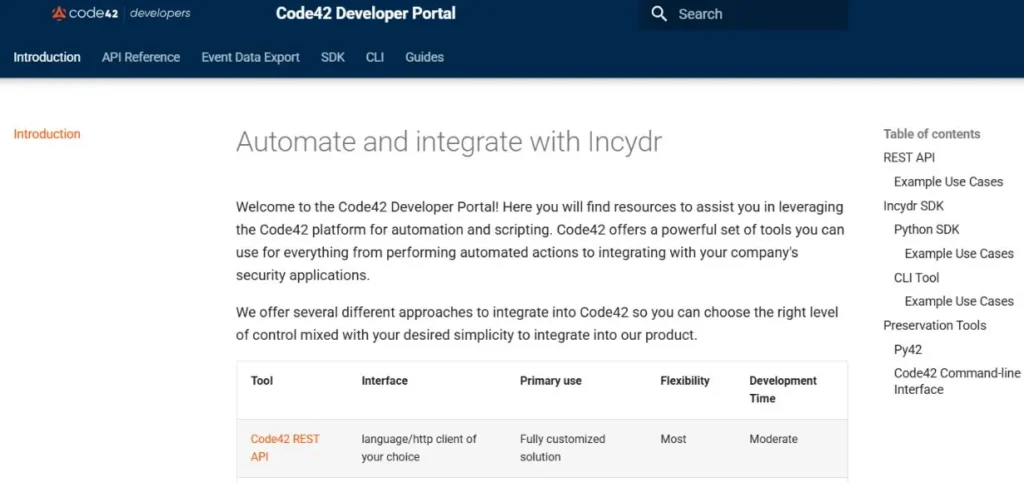
Code42 has earned a reputation for being highly endpoint data protection and insider threat detection oriented. One of the advantages of this platform, as compared to other products, is its ability to offer effective DLP and recovery capabilities; therefore, it is specifically applicable in organizations that are concerned about data breaches and inadvertent data loss through the use of employee devices. Code42 is an excellent tool to track the activities happening on the endpoint devices and to monitor the manner in which employees utilize and transfer information on their computers. Data loss prevention advanced features detect suspicious activities prior to their manifestation as actual data breaches.
Key Features
- Insider threat detection
- High-tech data loss prevention.
- Globalized information surveillance.
Pros
- Strong endpoint protection
- Good insider threat monitoring.
- Good data recovery capabilities.
Cons
- Limited cloud coverage
- Minor SaaS protection.
- Primarily endpoint-focused
Best For: Endpoint-heavy
Pricing: Per-device pricing model available
Website: https://developer.code42.com/
Future of Data Classification Tools
1. AI-Powered Classification Progression: In keeping with the experience of the latest technology and its effective application to enhance the system and the advantages of its classification in the many areas of its use.
2. Zero Trust Architecture Implementation: Zero-trust security will be used together with data classification software. Each access to the data will be carried out and regulated automatically.
3. Adaptation to Quantum Computers: With the rise of quantum computing, encryption will have a new purpose. The classification tools of data used should be developed to manage quantum threats.
4. Privacy-Preserving Technologies: Paradigms will categorize information without revealing it. The automated data classification will be privacy-aware, as it will uphold security.
5. No single Data Security Platform: Individual tools will be integrated into holistic ones. The tools for classifying data ithe n future will provide full security.
Conclusion
Data classification solutions are now necessary in the wake of the rising security problems related to data and the pressure exerted by regulations among modern organizations. These solutions are very powerful and will automatically scan and identify sensitive information as well as protect the information in all your digital environments. Data classification software provides essential security features that manual processes can only barely achieve, like the prevention of data breaches, among other functions, such as guaranteeing compliance.
It is important to keep in mind that the deployment of tools of data classification is merely a start. These solutions remain as valuable as possible since they are regularly updated, refined, and trained to the staff. Begin the process of data classification today in order to develop a more secure, compliant, and data-aware organization.
FAQs
Q1: What are data classification tools used for?
The data classification tools are also used to automatically identify and classify sensitive data across your organization. They facilitate data security, compliance, a nce and prevention of breaches by implementing the right controls on the data security based on the levels of data sensitivity.
Q2: Are data classification tools expensive or not?
It has very distinct pricing that depends on features and data volume, and the size of the organization. There is data classification software as low as a few thousand dollars per year, and enterprise-wide solutions in the hundreds of thousands, also depending on need and size.
Q3: Is it possible to apply data classification tools in small businesses?
Admittedly, numerous data classification tools would be applicable in a small business. Search for scalable data categorization solutions that are dynamically priced with suitable pricing models that accommodate small budgets, but offer the required security measures for data.
Q4: What is the duration of implementing data classification software?
It can take several months or a few weeks to be implemented, depending on the complexity. Simple automated data classification deployments may require 2-4 weeks to complete, and extensive enterprise deployments may take 3-6 months to complete a full deployment.
Q5: Does data classification support cloud applications?
Labeling tools and data labeling can be found in most ca, and support in the cloud environment. Top solutions are connected with popular solutions such as Google Drive, Microsoft 365, Slack, Salesforce, and a host of other cloud applications being used by your organization.
Continue Exploring: Best Startup IT Companies in Chennai
